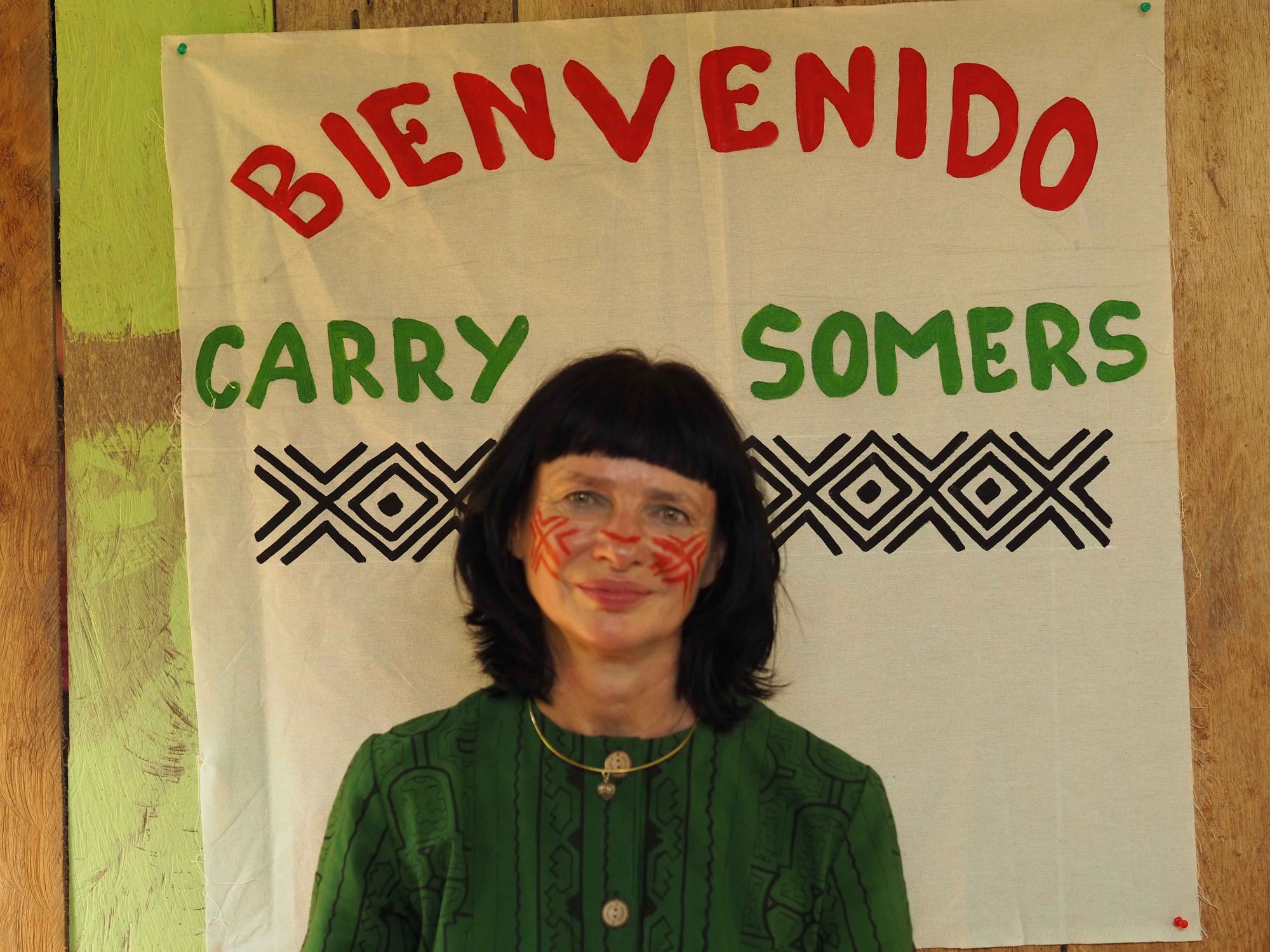
Kresse Wesling CBE co-founded Elvis & Kresse in 2005 after discovering that London’s decommissioned fire hoses were destined for landfill. Since then, the company has transformed fire hoses and other waste materials into luxury accessories designed for longevity.
A certified B Corp, Elvis & Kresse donates 50% of profits from its fire hose collection to the Fire Fighters Charity. Its wider collaborations have included a five-year partnership with the Burberry Foundation, developing ways to repurpose Burberry leather offcuts.
Guided by her grandmother’s words, “if you are capable, you are responsible”, Kresse’s approach extends beyond materials and products. In 2021, this thinking led to New Barns Farm, where regenerative agriculture, renewable energy and the operations of Elvis & Kresse work alongside one another towards an ecosystem in which business and nature can thrive together. Their ambition is to become Net Zero and Net Regenerative by 2030 - ultimately creating more environmental good than harm.
Q1. How does sustainability influence your work and daily life?
It influences almost every decision we make, both major and minor. Also, we don't separate work from life which means that although we are far from perfect this is definitely a 360 degree journey for us. Here are a few examples:
1. Our business exists to deliver sustainable, circular design.
2. We buy local, seasonal and organic produce
3. We moved to the farm and set up a regenerative agriculture project because we have the overarching goal of being net regenerative (which to us means cleaning more water than you consume, generating more renewables than you consume and creating exponentially more good than bad etc.).

Q2. Have you experienced any pivotal moments that deepened your understanding or commitment to sustainability?
Soooo many... and the more open we are to them, the more we keep having incredible experiences. I should start with camping in the Rocky Mountains as a kid and having incredible experiences with bears, moose, big black night skies and freezing cold lakes. Or I could mention kayaking at school to islands that were uninhabited but covered in washed up trash, mostly styrofoam. But I think the richest experience is the one we are living now, with the farm, where there is never enough time in the day to learn about what is happening in the soil, in our ecosystem, and how we might best serve it. One completely unforgettable experience happened when I was probably 12 or 13 and my hero of a grandmother just made a specific blunt statement, directly to me: 'if you are capable, you are responsible'; I suppose I have spent every day since working out just what I am capable of!
Q3. Have you encountered any unexpected benefits or opportunities from adopting sustainable practices?
I think the most important thing is contentment - because it means living within the Doughnut, it means the satisfaction of knowing that you are doing everything you can to avoid being involved with / or supporting extraction and exploitation. A totally circular world, where capital flows in a circular way too would just simply be less stressful.

Q4. In your view, what’s one simple and doable lifestyle change that could have a meaningful impact on sustainability?
Change your pension. The Global Pension Assets Study estimates global pension fund assets across 22 major pension markets account for 69% of the GDP of these economies. What is your pension doing for society? Is it helping to deliver a sustainable future or is it propping up fossil fuel businesses. And more broadly, you should instigate a conversation at work, with your employer.
Q5. How do you think circular economy principles — eliminate waste and pollution, circulate products and materials, and support ecosystem regeneration — could be adopted in your industry or in a hobby?
Circular economy principles can apply everywhere. If we learn from nature, in which circularity reigns, and adopt circular systems for energy, material goods, and food we would avoid linear things like all single use packaging, pesticides, forever chemicals... and this would have a wonderful dampening effect on over-consumption, climate change, biodiversity loss... This can all happen if we stop thinking of ourselves as consumers and start being custodians. Everything that you interact with, whether it be water, food, land, fuel, or clothing needs to be seen as something you utilise for a time and are then responsible for finding a new home for or a second life for.
Q6. Are there any books, documentaries, or podcasts around sustainability that you feel particularly inspired by and would recommend to others?
Yes!
Silent Spring by Rachel Carson was a game changer for me, I read it when I was probably 12-13
Small is Beautiful by Schumacher
Cradle to Cradle by Braungart and McDonough
The Overstory by Richard Powers
Entangled Life by Merlin Sheldrake
This Changes Everything by Naomi Klein
Doughnut Economics by Kate Raworth
Consumed by Aja Barber
Drawdown by Paul Hawken
Wendell Berry - Dip in almost anywhere, maybe start with the poem The Peace of Wild Things
Films/Docs: The Biggest Little Farm
Podcast wise, we listen to a bunch on regenerative agriculture - and like The Organic Wine Podcast, John Kempf's Regenerative Agriculture Podcast and Farmerama Radio.
Also, come and see us! We run workshops and farm tours very regularly.

Q7. Is there a circular designer or brand you particularly admire and why? This doesn’t have to be in fashion.
I admire spiders - they are incredibly efficient, creative and circular!
Q8. What is the most timeless piece in your wardrobe, where did you find it and how long have you had it for?
I have a pair of cowboy boots, they were my brother's from when he was 13 (he is now 47). When he outgrew them I inherited them and they have been my favourite shoes ever since. I have been wearing them for more than 30 years. They have been re-soled twice and are still going strong.
Q9. What do you consider when buying new clothing?
We almost never buy anything new. First, we really think about what we actually need. My method for this is absolutely no impulse buying, so only ever going ahead with a purchase if you have walked away from it the first time. Then we check and see what we can find on eBay or Vinted, or if it is for an occasion what we could borrow or update from clothes we already have.
Q10. How do you curate your wardrobe?
I think curate would be a strong word for me! A lot of the clothes I have had, and wear, are from decades ago. I add things slowly, and only when needed and really, I do really know what I like and am comfortable in - bootcut jeans with a black v-neck sweater or t-shirt is pretty much my staple (yes, my allegiance to those boots runs deep). I am very big on monochrome, classic staples.